
Founder & Chief Executive Officer, Trade & Investment Bangladesh (T&IB)
Editor, T&IB Business Directory; Executive Director, Online Training Academy (OTA)
Secretary General, Brazil Bangladesh Chamber of Commerce & Industry (BBCCI)
Bangladesh has become one of the most dependable global manufacturing bases for mass-market to premium-volume apparel, combining scale, competitive costing, increasingly sophisticated product development, and a mature export ecosystem built around long-term partnerships with international brands and retailers. Over the last decade, the country consistently held its place as the world’s second-largest apparel exporter after China, supported by a dense supplier network, experienced merchandising teams, and large compliance-driven production clusters.
From a trade-performance viewpoint, Bangladesh’s apparel exports remain the backbone of national merchandise exports: the BGMEA’s export performance dashboard shows apparel exports to the world totaling about $38.48 billion in 2024 and $38.82 billion in 2025 (calendar-year figures shown on the dashboard), reflecting the sector’s continued resilience despite global demand swings.
For many foreign buyers, the sourcing advantage is not only price it is also Bangladesh’s ability to deliver consistent large volumes across core categories (knit and woven), while gradually expanding into higher value-added lines such as outerwear, athleisure, lingerie, tailored products, and performance wear.
What foreign buyers typically need to know before sourcing from Bangladesh
Bangladesh garment exporters generally work under FOB/CIF/CFR terms depending on buyer preference and shipping capability. Buyers usually begin by shortlisting factories based on product specialization (knit/woven/denim/sweater/outerwear), compliance profile (social, safety, chemical management), capacity, lead time, and development strength. A normal sourcing cycle includes sharing tech packs and target pricing, developing lab dips and fit samples, confirming trims and fabric approvals, conducting pre-production and inline inspections, and then shipping with standard export documentation such as commercial invoice, packing list, bill of lading/air waybill, certificate of origin, and any buyer-required test reports. Most large exporters are used to third-party inspections and AQL standards, and many can support sustainability requests (recycled materials, traceability, lower-impact washing) depending on product type and mill/factory capabilities.
Market access and “why now”
For buyers selling into the United States, tariff dynamics are always important. A recent Reuters report (Feb 9, 2026) noted a trade arrangement framework involving a reduced U.S. tariff level and zero-tariff treatment for certain apparel using U.S.-produced inputs, which if applicable to your sourcing model can improve landed-cost competitiveness and supply planning.
Major Garment Product Exports from Bangladesh:
1. T-Shirts and Basic Knit Tops (Cotton and Blends)
Bangladesh is a powerhouse for cotton T-shirts, fashion tees, and basic knit tops because it combines huge knitting capacity with experienced cut-and-sew lines and a deep ecosystem of trims, printing, embroidery, and washing services; this category is among the country’s top export earners according to BGMEA’s main apparel items dataset. Production is concentrated around Dhaka and its industrial belt especially Gazipur (Tongi), Ashulia, Savar, Narayanganj, and nearby zones where large knit composite factories and supporting units are clustered. As a buyer, importing is usually straightforward: select a knit specialist factory based on GSM capability, stitch type, print/embroidery capacity, and compliance; finalize size specs and shrinkage standards early; lock fabric and color approvals (lab dips, bulk shade bands); then manage packing requirements (solid size vs ratio packs) to match your DC/store flow. If you’re building a year-round basics program, Bangladesh is well suited for continuous replenishment planning due to its stable base capacity.
2. Polo Shirts and Piqué Knits
Polo shirts cotton piqué and blended piqué are a classic Bangladesh export item because factories have long experience in collar development, placket construction, and wash/finishing control. Production clusters overlap with T-shirt hubs, again centered around Gazipur, Savar, Ashulia, Narayanganj, with many factories offering in-house knitting/dyeing and embroidery. For importing, buyers typically focus on collar shape stability, pilling performance, color fastness, and shrinkage; it’s wise to define tolerance and testing protocols upfront and confirm packaging (collar supports, folding boards, and carton marking) according to your retail standard, since presentation can materially affect retail acceptance.
3. Knit Shirts, Henleys, and Fashion Knitwear (Light-to-Midweight)
Beyond basics, Bangladesh exports a growing range of fashion knit shirts, henleys, rib tops, and trend-driven silhouettes that require stronger product development and tighter workmanship control. These are mostly produced in the same knit clusters around Dhaka, Gazipur, Narayanganj, where factories maintain sample rooms and merchandising teams capable of rapid prototyping. Importing success in this segment depends on aligning on grading rules, stretch recovery standards, and consistent fabric lots, especially for rib and elastane blends, which can otherwise cause fit drift across colors or production batches.
4. Sweaters, Pullovers, and Cardigans (Flat Knit)
Bangladesh is globally recognized for sweater exports, including cotton/acrylic/wool-blend flat knit pullovers, cardigans, and fashion sweaters, and BGMEA’s data highlights sweaters among the leading export categories. Sweater production is strongly concentrated in and around Dhaka, Gazipur, Narayanganj, with many factories running modern knitting machines and linking/finishing lines. From an importing perspective, the main checkpoints are yarn sourcing consistency, pilling performance, measurement stability after wash, and needle drop/defect control; buyers often do multiple rounds of wash tests and wear trials before bulk approval, and it’s common to require metal detection and needle policy compliance as standard export procedures.
5. Sweatshirts, Hoodies, and Fleece Programs
Bangladesh is a major supplier of fleece and French terry sweatshirts/hoodies, benefiting from large knit fabric capacity and competitive CMT. Production is again concentrated around Dhaka, Gazipur, Ashulia, Savar, with many factories able to support brushed fleece, garment dye (selected suppliers), and a wide range of prints and appliqués. Importing best practice is to lock down handfeel and shrinkage early, confirm drawcord and safety requirements for kids styles, and specify packaging to protect prints and prevent piling during transit; many buyers also schedule pre-shipment inspections for seam strength and measurement checks because bulk fleece can vary if fabric lots aren’t tightly controlled.
6. Underwear and Intimates (Men’s Basics and Selected Lingerie)
Underwear is listed among key apparel export items in BGMEA’s main item series, reflecting established capability in men’s briefs/boxers and growing competence in more complex intimate items in specialized factories. Production is largely in Dhaka, Gazipur, Narayanganj clusters, with select units focusing on elastics, waistbands, and bonded seams. Importing requires clear standards for stretch and recovery, GSM consistency, needle/metal control, and packaging (inner poly, hygiene stickers, size labeling); if you source women’s intimate/loungewear, supplier selection becomes even more critical because pattern engineering and fit expertise are decisive.

7. Socks and Hosiery
Socks and hosiery exports are supported by specialized knitting units, often located in Narayanganj, Gazipur, and parts of Dhaka’s industrial zones, with capability ranging from basic athletic socks to fashion jacquards (depending on supplier). Buyers importing socks typically define fiber composition tolerance, colorfastness, pilling, and pair-matching standards; packaging and barcode accuracy matter heavily because socks are SKU-dense items, and exporters are used to shipment documentation tailored to large retail distribution.
8. Denim Jeans (Five-Pocket, Stretch, and Fashion Wash)
Bangladesh is a major producer of denim jeans, leveraging scale in cutting/sewing and broad access to washing facilities. Denim production and washing are heavily concentrated around Gazipur, Savar, Ashulia, Narayanganj, and Chattogram areas, with different factories specializing in raw denim, stretch denim, or fashion wash development. For importing, buyers should align early on wash standards (shade, whisker effects, abrasion level), chemical compliance, and testing requirements, since denim is both fashion-sensitive and compliance-sensitive; many buyers also use third-party inspection for denim to ensure wash consistency across lots, and some require wastewater/chemical management assurances depending on brand policy.
9. Woven Trousers and Chinos (Men’s and Women’s Bottoms)
Woven trousers are one of Bangladesh’s largest export items by value in BGMEA’s series, reflecting extremely deep capacity in classic bottoms. Production clusters include Dhaka, Gazipur, Narayanganj, plus Chattogram for certain woven groups; many factories can support cotton twill, poplin, viscose blends, and stretch wovens. Buyers importing woven bottoms usually focus on fit consistency (rise, thigh, knee, inseam tolerances), pocket construction quality, seam slippage, and colorfastness; bottoms are measurement-sensitive, so strong pre-production approvals and inline measurement audits reduce claims and returns.
10.Woven Shirts and Blouses (Formal, Casual, and Fashion Woven Tops)
Bangladesh exports significant volumes of woven shirts and blouses, another key category highlighted in BGMEA’s main item data. Production is common in Dhaka, Gazipur, Narayanganj woven clusters and parts of Chattogram, where factories are strong in collar/cuff construction, plackets, and buttoning. For importing, buyers typically standardize stitch density, collar stand shape, fusing quality, and appearance after wash; woven tops are also trim-intensive, so aligning on button quality, spare buttons, labeling, and carton packing specifications is essential for smooth customs clearance and retail readiness.
11.Jackets and Lightweight Outerwear (Woven and Knit)
Bangladesh has been expanding in jackets lightweight woven jackets, windbreakers, quilted styles, softshell (select suppliers), and fashion outerwear often produced by factories with better technical capability and stricter process control. These units are commonly located around Dhaka, Gazipur, Ashulia, Savar, and Chattogram EPZ/industrial areas, where export infrastructure is strong. Importing outerwear requires careful attention to fabric performance, seam sealing (if any), zipper sourcing, and packing to protect shape; buyers also tend to require detailed component lists and testing because outerwear uses more accessories and can trigger stricter customs scrutiny in some markets.
12.Tailored Suits, Blazers, and Formalwear
For buyers seeking structured garments blazers, suit jackets, tailored trousers Bangladesh offers competitive manufacturing in factories experienced with fusing, shoulder shaping, canvas options (depending on tier), and pressing standards. Production is found in specialized woven and tailored units in Dhaka and surrounding industrial zones. Importing tailored garments is more technical than basics: buyers should define construction type (half-canvas/full-fuse), set pressing/appearance standards, confirm size set samples rigorously, and align on packaging (hangers vs flat pack) to protect shape and reduce damage claims.
13.Workwear and Uniform Programs
Bangladesh is highly capable in uniforms and workwear due to its scale, consistent stitching quality, and the ability to handle repeat orders with standardized specs. These are produced across Dhaka, Gazipur, Narayanganj, and Chattogram clusters, often in factories that also handle bottoms and woven tops. From an importing standpoint, the key is consistency over time: lock the spec pack, shade standards, and labeling early, then maintain a stable supplier relationship to preserve fit and color continuity across reorders important for corporate identity programs.
14.Kidswear (Knit and Woven)
Kidswear is a major sourcing segment for Bangladesh because the country can deliver high volumes of both knit and woven children’s products at competitive costs. Production is widespread across knit and woven hubs near Dhaka, Gazipur, Ashulia, Savar, Narayanganj, with factories accustomed to buyer safety standards. Importing kidswear requires special attention to safety compliance (cords, small parts, choking hazards), chemical compliance, and labeling regulations; experienced exporters generally understand these requirements, but buyers should explicitly incorporate market-specific compliance checks in pre-production to avoid border delays.
15.Sleepwear and Loungewear (Sets, Pajamas, Robes)
Sleepwear and loungewear programs especially cotton jersey sets and woven pajama bottoms fit well within Bangladesh’s existing knit/woven strengths. Manufacturing is concentrated in the usual apparel belts around Dhaka and nearby districts, often in factories already supplying tees, pants, and fashion basics. Importing is easier when the buyer standardizes fabric types and prints, defines shrinkage limits, and uses consistent packaging; sleepwear is often sensitive to handfeel and comfort, so fabric approvals and wash testing become the “make or break” steps before bulk.
16.Activewear and Sportswear (Selected Performance Programs)
Bangladesh is increasingly producing sportswear and athleisure, including leggings, training tops, and functional silhouettes, particularly where factories have experience with elastane blends and performance seams. These are usually produced in better-equipped knit and synthetic-capable factories around Dhaka, Gazipur, Ashulia–Savar corridors. Importing performancewear requires closer control over fabric sourcing, stretch recovery, seam durability, and pilling, plus careful testing aligned with your end-use claims; buyers often choose a sourcing agent or third-party lab workflow to keep approvals fast and documented.
How Foreign Buyers Can Connect with Bangladeshi Garment Exporters (Without Getting Stuck)
The fastest route is to start from specialization: identify whether you need knit, woven, denim, sweater, or outerwear, then filter suppliers by proven export history in that category and by compliance documentation. Next, request factory profiles, capacity charts, recent inspection reports, and a product portfolio aligned with your market segment. After that, run a controlled development cycle with clear timelines for sampling, fabric/trims approvals, and costing, and use third-party inspection and lab testing to reduce quality and compliance risk. Many buyers also prefer working through a professional sourcing agent in Bangladesh who can physically audit factories, verify production realities, negotiate commercially, and manage on-ground execution especially if you are scaling or sourcing multiple categories across multiple suppliers.
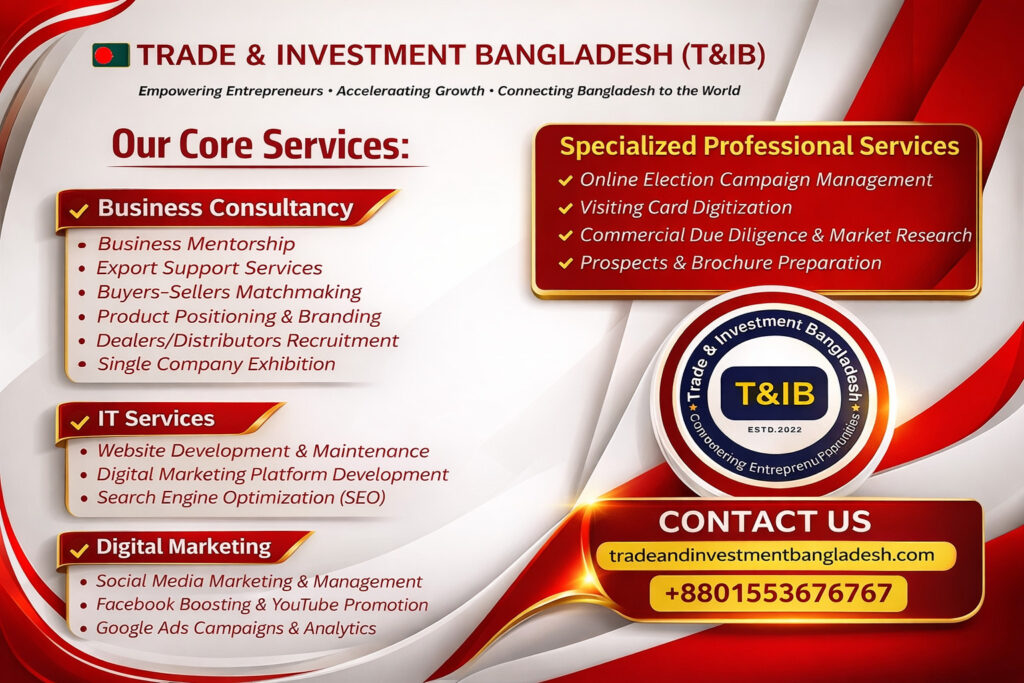
Sourcing Agent Services of Trade & Investment Bangladesh (T&IB) for Foreign Buyers
Trade & Investment Bangladesh (T&IB) supports foreign buyers as a sourcing and trade facilitation partner by helping you identify suitable garment exporters, validating supplier capability and compliance readiness, coordinating sampling and merchandising communication, and managing shipment readiness through documented processes. T&IB’s role is particularly valuable when you want to reduce supplier risk, shorten the time from inquiry to production, and maintain consistent quality across multiple styles or suppliers because local execution (factory follow-ups, inline checks, correction loops) is often what determines whether a program runs smoothly or becomes costly through delays, rework, or claim disputes. T&IB publicly lists its service presence and buyer support orientation, positioning itself as a business solutions and trade facilitation platform for international clients.
Why T&IB?
T&IB is a practical fit for foreign buyers who want a single coordination point in Bangladesh someone who understands local factory ecosystems and can translate buyer requirements into factory action, while keeping documentation and timelines clear. If you are entering Bangladesh for the first time, T&IB can help you avoid common pitfalls such as choosing a factory that is not truly specialized for your product, underestimating lead time realities, or missing compliance/testing steps that can later delay shipments at destination. If you are already sourcing from Bangladesh, T&IB can help you scale by strengthening supplier benchmarking, price negotiation support, development tracking, and pre-shipment readiness checks.
T&IB Contact Details
You can reach Trade & Investment Bangladesh (T&IB) at info@tradeandinvestmentbangladesh.com, Phone +880 1553 676767 and +880 1992 677117, Location Dhaka, Bangladesh.
Closing Remarks
Bangladesh garment exporters remain among the most capable partners for global apparel supply especially for buyers who value scale, consistent manufacturing, and competitive landed cost across knit, woven, denim, and sweater programs. The strongest results typically come from disciplined supplier selection, clear technical standards, structured approvals, and on-ground execution control. If you want to source confidently whether you are placing your first order or building a multi-season program working with an experienced local sourcing agent like Trade & Investment Bangladesh (T&IB) can help you move faster, reduce risk, and protect quality from development to delivery.
Comments